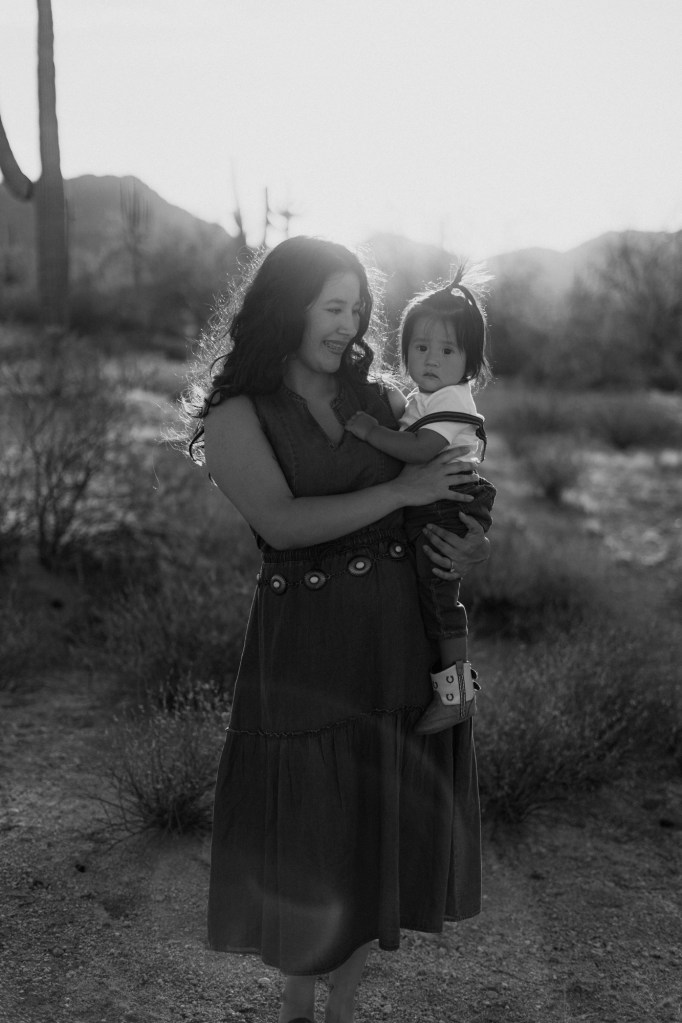
They say breastfeeding is “natural,” and for a moment, it was. When my son Asher latched right after birth, I felt powerful. I had just pushed him into the world, and he already needed me. It was raw and sacred and quiet all at once. There was no pain yet, no worry, just a surge of love and a feeling like, this is what my body was meant to do.
But that beautiful moment didn’t last forever. What came next was harder: learning how to hold him just right, working through the shallow latches, the clicking sounds, the engorgement, the sore spots, the doubts. We figured it out….slowly, with some tears, some grit, and that quiet strength I know comes from the women before me.
Thirteen months later, we’re still on this journey, still nursing, still surviving the long nights, still finding new ways to balance motherhood, school, and everything in between. I’ve breastfed in cars, in bathrooms, under blankets, without blankets, half asleep, half-dressed, and many times time while on Zoom calls (camera off). Sometimes in airports, and multiple times with my laptop open trying to write a paper on Indigenous Maternal Health. But always with a prayer in my heart because feeding my son feels like more than survival. It feels like ceremony.
This post isn’t just about breastfeeding, though, it’s about carrying.
My blog is called All the Ways I Carry Him, and it began with grief. I lost my little brother, Austin, the first person I ever mothered. I was the oldest daughter in our family, and I looked after him like he was mine. I taught him his eyes, his nose, his mouth, his ears. He came to me when he cried. I brushed his hair and picked out his little outfits. I worried over him in the way that only a mother, or a big sister raised to be one, can understand.
We’re originally from Montana. Even though I live in Arizona now, my heart still belongs to those wide-open skies, the dirt hills we ran barefoot on, and the smell of Grandma Mary’s fry bread drifting through the house on a Sunday afternoon. When I think of Austin, I see him in snow boots too big for his feet, running down dirt roads, face flushed from cold and joy. Sometimes the grief feels heavier being far from home, like trying to sing a song when you’re missing the first note.
Still, I carry him.
In our communities, mothering has never belonged to just one person. Aunties, older siblings, cousins, grandmas, we all carry the babies. It’s how we were raised. I didn’t have the language back then to call myself a caregiver, but looking back now, I know I mothered Austin the way our people always have: with love, with responsibility, with the kind of care that lasts even when they’re gone.
Now, I carry him when I rock Asher to sleep. I carry him when I write papers on Indigenous maternal outcomes, when I study late into the night, when I show up for work on Med/surg floor, tired but determined. I carry him in the dreams I have for Native mothers and babies, dreams that are healing, dignified, and rooted in respect.
Asher’s birth brought everything full circle. My labor wasn’t easy. I was shaking, vomiting, scared, and exhausted. I ended up needing an epidural. But my midwife was exactly what I needed, steady, calm, grounding. During the pushing phase, she guided me with such strength and care that I knew, deep in my bones, this is what I’m meant to do. My husband was there too, holding space, holding me. Between the two of them, I felt safe enough to surrender. And in that surrender, I found purpose.
I’m pursuing my Doctor of Nursing Practice to become a nurse-midwife because I believe Native women deserve better, better care, better outcomes, better stories. I’m not here just to catch babies. I’m here to prevent harm. To listen before there’s a crisis. To protect what’s sacred before it’s lost. That’s not just clinical work, that’s cultural work.
And yes, while I’m learning, and growing, and grieving, I’m still breastfeeding. My son still prefers one side over the other. He nurses when he’s tired, overstimulated, or when I just sat down with a plate of food. It’s not always easy. But I’m thankful every single day that I kept going.
Because breastfeeding isn’t just about milk. It’s connection. It’s medicine. It’s our tradition.
It’s also a reminder that even when I feel unsure, my body, and my spirit know what to do. And not just because I’m a mom, but because I come from people who knew how to carry babies, and stories, and each other.
So I keep going for Austin, for Asher, for myself, and for the Native women whose care will one day pass through my hands. I carry them all: in my arms, in my grief, in my calling.
“There is no force more powerful than a woman determined to rise.”
— W.E.B. Dubois
 All The Ways I Carry Him